
 FAQ
FAQ Contact Us
 Site Map









Required Complaint Information
The required complaint information includes the full details of the complainant, details of the enforcement officer and details of the complaint.
Complaints can be channeled to EAIC through:
- WhatsApp Mobile Number : 019-355 5215;
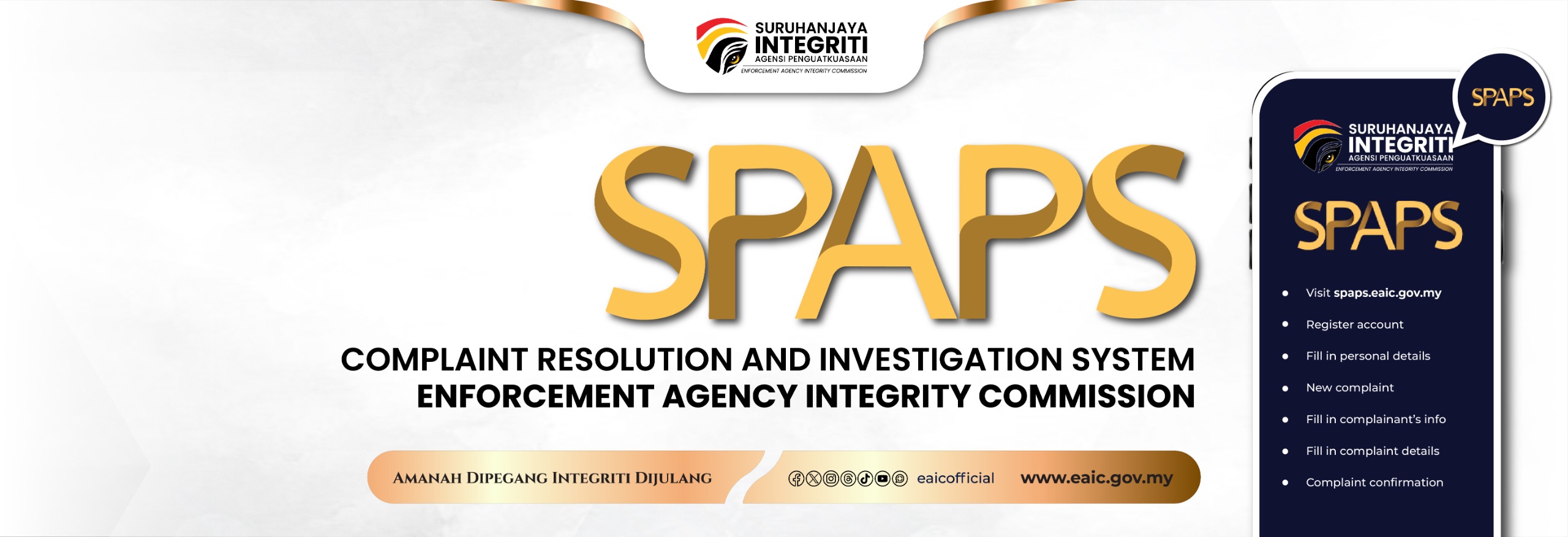
- Sistem Penyelesaian Aduan dan Pengendalian Siasatan (SPAPS) di Portal EAIC;
- e-mail to This email address is being protected from spambots. You need JavaScript enabled to view it.; or
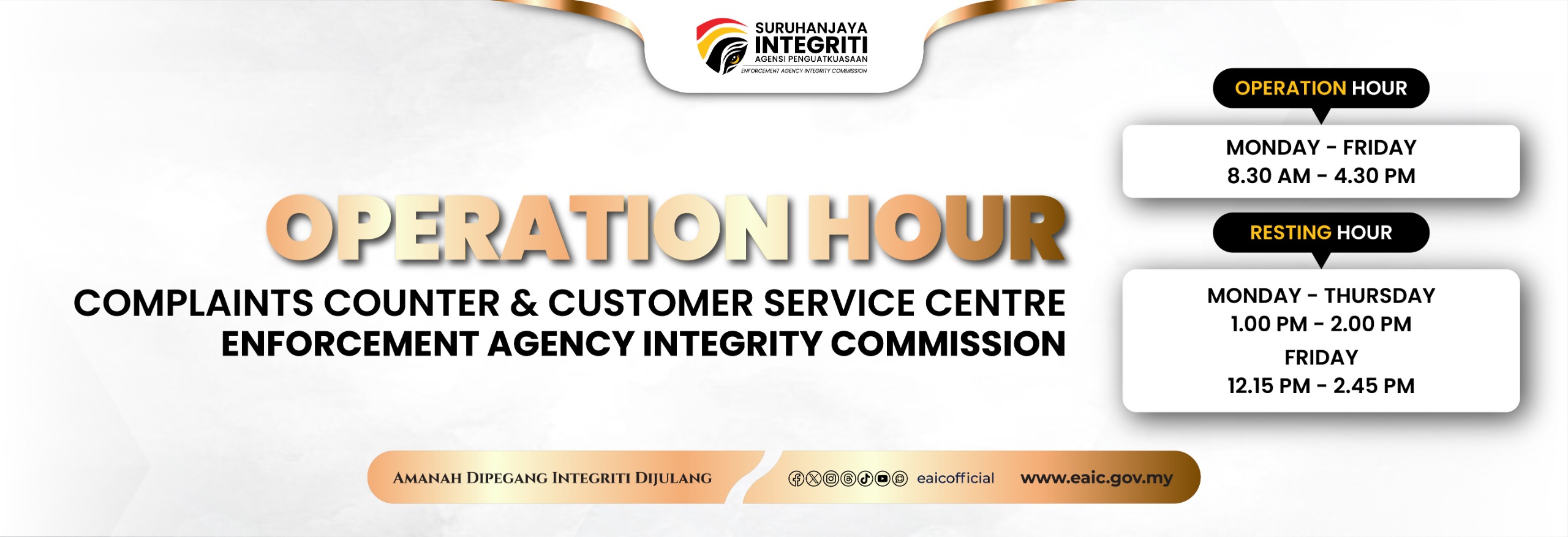
- come by at/visit the EAIC Complaint Counter and Customer Service Centre at Ground Floor, Menara Usahawan, No.18, Persiaran Perdana, Presint 2, 62652 Putrajaya.
-
EAIC flags irregularities in citizenship approvals for seven naturalised footballers
PUTRAJAYA: The Enforcement Agency Integrity Commission (EAIC) has uncovered irregularities in the approval process for Malaysian citizenship granted to seven heritage footballers, following an investigation into a complaint against the National Registration Department (NRD).
The commission said it had set up a special task force under Section 17 of the Enforcement Agency Integrity Commission Act 2009 to probe the matter.
"The investigation involved both the NRD and the Immigration Department, which are agencies under the Home Ministry responsible for processing and approving permanent residency and citizenship applications through naturalisation.
"The task force had examined various documents related to the seven players, including from the NRD and the Football Association of Malaysia (FAM).
"It also recorded statements from 15 officers under investigation from various agencies and five members of the public, while reviewing relevant laws, regulations and circulars," the commission said in a statement on Friday (July 10).
The commission said its findings showed that the Home Minister has the authority under Article 19 of the Federal Constitution to consider applications for citizenship by naturalisation.
"The minister had exercised his powers and discretion in granting special approval to the players, taking into account their contribution to football and the potential to bring glory to the country under Article 19(2) read together with Section 20(1)(e) of Part III of the Second Schedule of the Federal Constitution.
"However, the task force found that consideration of the requirements for the special approvals had been carried out within an extremely short period and in an irregular manner," it added.
Among the issues identified were irregularities in the issuance of entry permits involving the interview process and security screening conducted by the Immigration Department on the players.
The commission also found issues involving the handling of security screening by the Immigration Department and the Malay language proficiency test conducted by NRD for citizenship approval purposes.
It further highlighted non-compliance in the verification of renunciation of the players’ original citizenship by the authorities of their home countries, as well as failure to comply with the requirement to surrender their foreign passports to the Immigration Department.
Following the findings, the EAIC recommended that NRD and the Home Ministry review the entire citizenship naturalisation process and all related documents involving the seven footballers whose citizenship was approved under Article 19(2) of the Federal Constitution.
It also proposed the creation of clearer guidelines on the exercise of discretionary powers under the law, particularly in cases involving special circumstances, while taking into account the constitutional requirement of residency in Malaysia as a key basis for citizenship.
The commission further recommended that NRD and the Home Ministry establish a specific standard operating procedure (SOP) for granting citizenship under Article 19(2), as well as an SOP on the renunciation of original citizenship by foreigners who acquire Malaysian citizenship.
It said this was necessary as the Federal Constitution does not recognise dual citizenship, and the NRD should set a time frame requiring proof of renunciation of original citizenship, together with penalties for failure to comply.
EAIC also called on NRD to formulate guidelines on the exercise of the Registrar-General’s discretionary powers, particularly in the issuance of birth certificates under Section 10A of the Births and Deaths Registration Act 1957, stressing that such powers should only be exercised after due diligence is carried out and sufficient proof of birth is established.
The commission also urged the Immigration Department, NRD and the police to introduce a specific SOP for stricter and more comprehensive security screening procedures for entry permit and citizenship approvals.
“Citizenship by naturalisation is a matter involving national interest and security. Therefore, the SOPs in force must be monitored and strictly complied with by the Immigration Department and NRD,” it said.
The EAIC said its investigation report had been submitted to the Home Ministry, the Immigration Department and the NRD for further action.
The commission also noted that police reports had been lodged over allegations of document forgery which were ruled to be fake by the Court of Arbitration for Sport (CAS).
It said the alleged forgery should be thoroughly investigated by the relevant authorities and referred to the appropriate parties, as the matter falls outside EAIC’s jurisdiction under the Act.
SUMBER : The Star
-
Kelulusan warganegara 7 pemain naturalisasi diberi tempoh singkat, tidak teratur – EAIC

PUTRAJAYA: Kelulusan khas kewarganegaraan kepada tujuh pemain naturalisasi bola sepak Malaysia didapati dibuat dalam tempoh yang amat singkat dan secara tidak teratur.
Kesalahan itu berdasarkan hasil siasatan pihak Suruhanjaya Integriti Agensi Penguatkuasaan (EAIC) melalui pasukan petugas khas (PPK) yang ditubuhkan untuk menyiasat berdasarkan aduan yang diterima berhubung kes itu.
Menurut EAIC, Perlembagaan Persekutuan memberikan kuasa kepada Menteri Dalam Negeri dalam mempertimbangkan permohonan kewarganegaraan secara penaturalisasian menurut peruntukan di bawah Perkara 19 Perlembagaan Persekutuan.
Katanya, MDN selanjutnya menjalankan kuasa dan budi bicara dengan memberi kelulusan khas mengambil kira sumbangan pemohon dalam sukan bola sepak yang boleh mengharumkan nama negara menurut Perkara 19(2) dibaca bersama seksyen 20(1)(e) Bahagian lll Jadual Kedua Perlembagaan Persekutuan.
“Peruntukan tersebut memberi kuasa budi bicara kepada Menteri Dalam Negeri atas sebab-sebab yang ditetapkan secara am atau secara khas oleh Menteri untuk menghitung tempoh kemastautinan seseorang itu tidak berada di dalam Persekutuan boleh dianggap bermastautin di Malaysia.
“Namun PPK EAIC mendapati bahawa pertimbangan kepada syarat-syarat yang perlu dipenuhi bagi memperoleh kelulusan khas telah dibuat dalam tempoh yang amat singkat dan secara tidak teratur,” katanya dalam kenyataan hari ini.
EAIC berkata, siasatan turut mendapati, terdapat ketidakaturan dalam proses pengeluaran Permit Masuk melibatkan proses temuduga dan tapisan keselamatan oleh Jabatan Imigresen Malaysia (JIM) kepada pemain itu.
Katanya, terdapat juga isu berhubung pengendalian tapisan keselamatan oleh JIM dan ujian Pengetahuan Bahasa Melayu (UPBM) oleh JPN bagi tujuan kelulusan kewarganegaraan.
Pada masa sama, katanya, terdapat ketidakpatuhan berkenaan pengesahan pelepasan kewarganegaraan negara asal daripada pihak berkuasa negara asal pemain itu.
“Terdapat ketidakpatuhan berkenaan penyerahan pasport negara asal oleh Pemain naturalisasi itu kepada JIM,” katanya.
Sehubungan itu, EAIC mengesyorkan JPN dan KDN menyemak semula keseluruhan proses dan dokumen-dokumen kewarganegaraan melalui penaturalisasian yang telah diberikan kepada tujuh pemain berkenaan di bawah Perkara 19(2) Perlembagaan Persekutuan.
Katanya, ini memandangkan dapatan EAIC menunjukkan bahawa terdapat ketidakaturan tersebut.
Katanya, satu garis panduan perlu diwujudkan dalam menjalankan kuasa budi bicara di bawah undang-undang dengan mengambil kira peruntukan asas dalam Perlembagaan Persekutuan.
Langkah ini dengan menitikberatkan tempoh kemastautinan dalam negara sebagai satu asas kewarganegaraan diperakukan dan faktor penting juga dalam mempertimbangkan kelulusan untuk diberikan atas dasar keadaan khas.
“JPN dan KDN mewujudkan prosedur operasi standard (SOP) khusus berkenaan pemberian taraf kewarganegaraan di bawah Perkara 19(2) Perlembagaan Persekutuan.
“JPN dan KDN menyediakan satu SOP khusus berkenaan pelepasan kewarganegaraan asal oleh warganegara asing yang telah memperoleh taraf kewarganegaraan Malaysia,” katanya.
EAIC berkata, memandangkan Perlembagaan Persekutuan tidak mengiktiraf dwi-kewarganegaraan, JPN perlu menetapkan satu tempoh yang mewajibkan pelepasan kewarganegaraan negara asal dilakukan dan hukuman sekiranya gagal untuk menyerahkan bukti pelepasan kewarganegaraan tersebut.
Katanya, JPN mewujudkan garis panduan berkenaan dengan penggunaan kuasa budi bicara oleh Pendaftar Besar khususnya bagi pengeluaran sijil lahir di bawah seksyen 10A Akta 299.
Ini dengan mengambil kira kemasukan peruntukan ini di bawah Akta 299 adalah bertujuan untuk mengadakan peruntukan yang jelas berhubungan dengan kuasa Pendaftar Besar untuk mendaftarkan mana-mana kelahiran.
“Kuasa budi bicara ini hendaklah digunakan hanya setelah Pendaftar Besar benar-benar berpuas hati kelahiran telah berlaku berdasarkan keterangan yang dikemukakan iaitu setelah segala proses usaha wajar (due diligence) telah dilaksanakan.
“JIM dan JPN bersama PDRM mewujudkan SOP khusus berkenaan tatacara pengendalian tapisan keselamatan yang ketat dan menyeluruh bagi tujuan kelulusan Permit Masuk dan kewarganegaraan,” katanya.
Dalam pada itu, EAIC berpandangan pemerolehan kewarganegaraan secara penaturalisasian adalah satu perkara yang melibatkan kepentingan dan keselamatan negara.
Oleh itu, katanya, SOP yang berkuat kuasa perlu dipantau untuk dipatuhi secara ketat oleh JIM dan JPN.
“Laporan Dapatan Siasatan EAIC ini telah diserahkan kepada KDN, JIM dan JPN untuk tindakan lanjut.
“PPK EAIC juga mengambil maklum bahawa laporan-laporan polis telah dibuat melibatkan isu pemalsuan dokumen yang telah diputuskan palsu oleh Mahkamah Timbangtara Sukan (CAS).
“Sehubungan itu, adalah wajar perkara ini dijalankan penyiasatan secara menyeluruh oleh agensi yang berkenaan dan selanjutnya dirujuk kepada pihak yang berkenaan memandangkan isu pemalsuan dokumen ini adalah di luar bidang kuasa EAIC di bawah Akta 700,” katanya. – UTUSAN
SUMBER : Utusan Malaysia
-
Ombudsman tangani kebocoran identiti pemberi maklumat melalui sistem berpusat
KUALA LUMPUR: Ombudsman Malaysia yang dicadangkan dijangka berperanan sebagai mekanisme utama untuk memperkukuh perlindungan pemberi maklumat, termasuk mencegah kebocoran identiti pengadu menerusi sistem pengurusan aduan berpusat di bawah satu agensi.
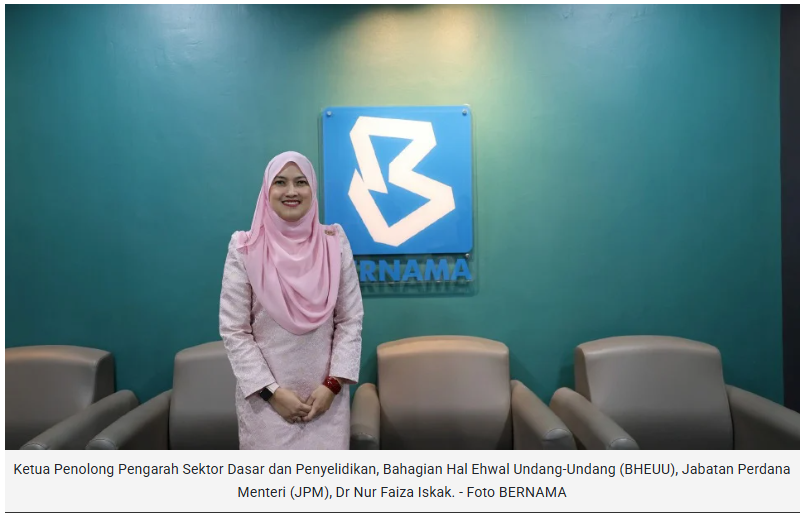
Ketua Penolong Pengarah Sektor Dasar dan Penyelidikan, Bahagian Hal Ehwal Undang-Undang (BHEUU), Jabatan Perdana Menteri (JPM), Dr Nur Faiza Iskak berkata cadangan itu bertujuan memperkukuh sistem sedia ada susulan kes pemberi maklumat berdepan tindakan balas selepas membuat aduan kepada agensi penguatkuasaan.
"Terdapat banyak situasi yang memerlukan kita meningkatkan kepercayaan rakyat dan pemberi maklumat berharap mendapat perlindungan lebih baik daripada agensi penguatkuasaan," katanya pada sesi Perbincangan Meja Bulat (RTD) bersama Dewan Perniagaan di sini, semalam.
Selain Nur Faiza, panelis lain terdiri daripada Pengarah Bahagian Reformasi Sektor Awam, Jabatan Perkhidmatan Awam Syuhaida Abdul Wahab Zen; Pengarah Seksyen Daya Saing Negara, Perbadanan Produktiviti Malaysia, Wan Fazlin Nadia Wan Osman dan Ketua Pasukan Pengurusan Projek Sistem eWORKS, Bahagian Perolehan Kerajaan, Kementerian Kewangan Malaysia, Ahmad Fauzi Sungip.
Nur Faiza berkata di bawah mekanisme yang dicadangkan itu, semua pendedahan dan aduan akan disalurkan terus kepada Ombudsman Malaysia untuk perlindungan, berbanding dihantar kepada pelbagai agensi penguatkuasaan seperti yang diamalkan ketika ini.
"Apa yang kami cuba lakukan ialah selepas Ombudsman Malaysia dilaksanakan nanti, semua pendedahan akan disalurkan kepada satu unit di bawah institusi ombudsman," katanya.
Beliau berkata inisiatif pemusatan itu dijangka menjadi langkah menangani kebocoran maklumat, khususnya membabitkan identiti pemberi maklumat, di samping memastikan perlindungan lebih kukuh dapat dikekalkan.
"Jadi, institusi itu hanya akan menyalurkan aduan kepada agensi penguatkuasaan untuk siasatan. Tiada pendedahan identiti akan dikongsi dan ini memastikan perlindungan ketat terhadap identiti pemberi maklumat," katanya.
Pada 10 Mei lepas, Menteri di Jabatan Perdana Menteri (Undang-Undang dan Reformasi Institusi), Datuk Seri Azalina Othman Said berkata cadangan Ombudsman Malaysia bertujuan menangani persepsi rakyat terhadap ketelusan proses aduan dalaman dan tidak bermaksud mekanisme sedia ada tidak berkesan.
Azalina berkata Biro Pengaduan Awam (BPA) bukan tidak berkesan, namun tertakluk kepada persepsi rakyat berkaitan ketelusan dan hasil aduan kerana ia beroperasi dalam struktur pentadbiran kerajaan.
Sementara itu, Wan Fazlin Nadia ketika menyentuh mengenai Reformasi Kerenah Birokrasi (RKB) berkata kerajaan menyasarkan untuk menyiapkan 500 projek RKB tahun ini sebagai sebahagian usaha mempercepat reformasi sektor awam serta meningkatkan kecekapan penyampaian perkhidmatan kepada perniagaan dan rakyat.
Beliau berkata RKB penting dalam mewujudkan ekosistem kondusif bagi pertumbuhan perniagaan dengan mengurangkan kerenah birokrasi, sekali gus membolehkan syarikat memberi lebih tumpuan kepada inovasi, pengembangan perniagaan dan pembangunan bakat.
"Daripada 325 projek yang berjaya disiapkan sepenuhnya tahun lepas, penjimatan kos pematuhan yang direkodkan berjumlah sekitar RM2 bilion yang memberi manfaat kepada perniagaan dan juga rakyat. Ini bukan penjimatan di pihak kerajaan tetapi penjimatan hasil pengurangan proses dan prosedur yang memberi manfaat kepada perniagaan serta rakyat," katanya.
RTD itu dianjurkan oleh Bahagian Perancangan Governans Nasional (BPGN) Suruhanjaya Pencegahan Rasuah Malaysia (SPRM) selaku sekretariat utama Pasukan Petugas Khas Indeks Persepsi Rasuah (CPI) bersama Institut Integriti Malaysia dan dirasmikan Ketua Setiausaha Negara (KSN) Tan Sri Shamsul Azri Abu Bakar.
Lebih 100 wakil dewan perniagaan yang mewakili komuniti perniagaan tempatan dan antarabangsa menyertai RTD itu yang bertujuan mendapatkan pandangan dan maklum balas daripada komuniti perniagaan dalam dan luar negara selain memperkukuh perkongsian maklumat antara kumpulan terbabit.
Ia akan membolehkan kerajaan merangka dasar yang lebih inklusif serta mampu menyokong pertumbuhan ekonomi mampan, inovatif dan lebih berdaya saing.
SUMBER : Berita Harian
-
EAIC flags irregularities in citizenship approvals for seven naturalised footballers
-
Kelulusan warganegara 7 pemain naturalisasi diberi tempoh singkat, tidak teratur – EAIC
-
Ombudsman tangani kebocoran identiti pemberi maklumat melalui sistem berpusat
-
EAIC KESAN KAD SUBSIDI BAHAN API KENDERAAN KERAJAAN DI SALAH GUNA
-
Malaysia to table Ombudsman bill to boost complaint transparency
-
Ombudsman diwujud bagi tangani persepsi rakyat terhadap ketelusan proses aduan dalaman - Azalina






ADDRESS
Enforcement Agency Integrity Commission
Level 5, Menara Block
Menara Usahawan
No. 18 Persiaran Perdana, Precint 2
62652 Putrajaya, Malaysia
CONTACT US
 GENERAL LINE+603-8880 5650
 FAX+603-8880 5646
 EMAIL This email address is being protected from spambots. You need JavaScript enabled to view it.